Super-gau Reifen runter Teil 1
English version see below Heute gibt es was aus der beliebten Reihe „Oh, das hatten wir so noch nie!“. Mir ist vor ein paar Wochen nämlich etwas was passiert, das ich niemandem wünsche – und so in der Tat auch noch nie hatte. Mir ist bei vollem Karacho der Vorderreifen von der Felge geflogen. Weil […]
Datum
Lesezeit
Kategorie
Archiv
Heute gibt es was aus der beliebten Reihe „Oh, das hatten wir so noch nie!“. Mir ist vor ein paar Wochen nämlich etwas was passiert, das ich niemandem wünsche – und so in der Tat auch noch nie hatte. Mir ist bei vollem Karacho der Vorderreifen von der Felge geflogen. Weil das, wie ich inzwischen weiß, ein komplexeres Thema ist und da viele Faktoren mit reinspielen, ist das hier bewusst nur die erste Folge dazu. More to come.


Erstens, weil es gerade im Hinblick auf die Aerodynamik auf die Abstimmung von Laufrad und Reifen ankommt, siehe etwa auch die Kooperation von Scott/Syncros und Schwalbe aus dem letzten Jahr oder die Tatsache, dass Giant mit seiner Tochterfirma Cadex auch Felgen und Reifen parallel entwickelt.
Zweiter Grund: Damit sowas wie ich es jetzt hatte, nicht mehr passiert und auch alle Passungen und Toleranzen hinhauen, müssen Felge und Reifen zwingend auch innen aufeinander abgestimmt sein. Dafür gibt es Normen wie ISO und Standards wie ETRTO, im Detail geht es darum dann aber ab dem zweiten Teil und das wird lustig.
Ich hatte und habe den Reifen auf einem 80er Vorderrad aus der ARC Serie der Schweizer im Fahrbetrieb und bin von dessen Perfomance echt angetan.

Gut zu wissen für alle Aero-Nerds: Mit den 20 Millimetern Innenmaulweite vom DT Swiss ARC 1100 schließt der Reifen super ab und ist etwas schmaler als der bauchige Part der Felge. Wer ganz viel Zeit hat, googelt dazu mal die „Rule 105“, von der die Amis in dem Zusammenhang immer reden, der Begriff stammt ursprünglich aus dem HED-/Zipp-Universum.
Aerocoach baut auch knappe 20 Millimeter innen und der Reifen ging Conti-typisch auch auf das Titan sehr eng drauf, hielt die Luft dann aber schon ohne Dichtmittel in der Werkstatt ein paar Tage. Das habe ich so bei den anderen Reifen selten bis eher gar nicht.
Weitere Eckdaten: Weil 100 Kilogramm Systemgewicht, gingen auf den ersten Blick recht hohe 6,5 Bar da rein und zwar am Morgen vor dem Losfahren, wie immer bei allen Tubeless-Combos. Manchmal wundert man sich dabei, wie viel Druck da auch innerhalb eines Tages schon wieder raus ist. Willkommen im Tubeless-Universum.
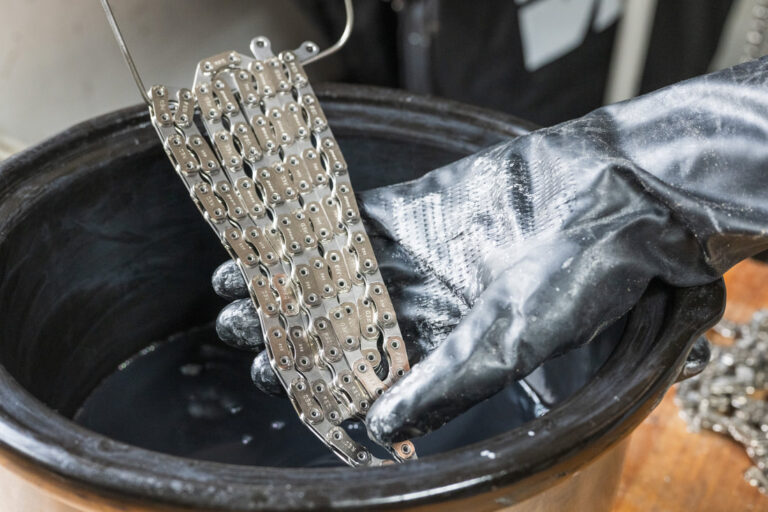
Ganz viele Sachen zum Schnellfahren außer Reifen und Laufrad gibt es bei mir im derbaranski.shop. Ob Cockpit-Parts, gewachste Ketten, Fast Food, ein paar Tools oder was zum Anziehen und schnell Aussehen, alles von mir vorher ausprobiert und damit „Der B approved“. Ach ja, deine Konkurrenz kauft schon lange bei mir ein. Und ich habe rund um die Uhr offen.

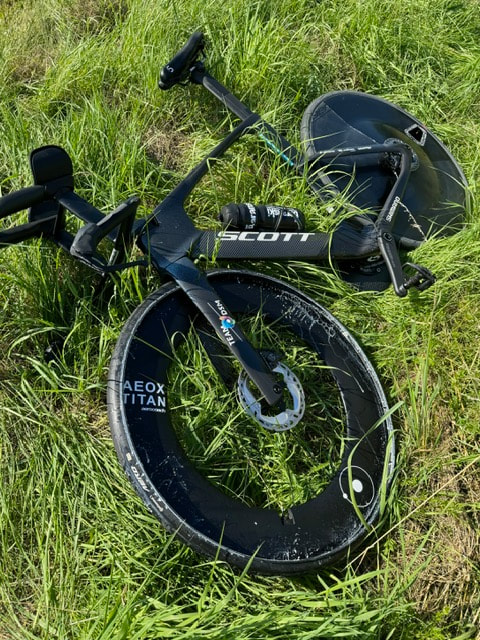
Konsequenz war ein Totalschaden an Vorderrad und Reifen und mein fast neues Scott Plasma TT sieht jetzt auch nicht mehr fast neu aus. Sowas tut mir immer mehr weh als die Pizza am Knie.

Danke an dieser Stelle an Louis „Taxi“ Kitzki, der mich dann aufgesammelt und nach Hause gefahren hat. Zum Glück beziehungsweise auf den ersten Blick waren nur Knie und Ellenbogen offen, ich habe mir eine Portion Müsli reingeschaufelt und bin wieder rauf aufs Rennrad, die restlichen vier Intervallen durchrocken. Das ging prima so unter Strom, bei Nummer eins standen viel weniger Watt als bei Nummer zwei bis fünf. Was die nächsten zwei Wochen leider gar nicht ging, ein bisschen blöd im Monat vor der WM in Aalborg, war alles auf dem Aero-Lenker und in der Armschalen, einfach aus Platzgründen, weil der Ellenbogen so dick war, da ich ja genau da drauf gedonnert war.
So, bis hierin für heute erstmal. Das Laufrad tingelt inzwischen durch Europa zum Vermessen und Schadensbegutachtung. Zwischenfazit: Ich habe einfach nur Sauglück gehabt, dass da nicht mehr passiert ist. Natürlich ist das Szenario jetzt ein Extrem, aber sowas passiert halt im Fahrbetrieb. Das Thema Reifen und Laufrad ist ja in der Industrie aktuell ein, sagen wir mal intensiv und kontrovers diskutiertes, schon wegen der Vorfälle im Frühjahr im Profifeld vor laufender Kamera, wo sich auch Bauteil eins von Bauteil zwei verabschiedet hat.


Today, we’re diving into the popular series “Oh, that’s never happened before!” A few weeks ago, something happened to me that I wouldn’t wish on anyone—and it’s something I’ve never experienced before. My front tire flew off the rim at full speed. Since, as I’ve come to learn, this is a pretty complex issue with a lot of factors at play, this is just the first part of the story. More to come.
IMPORTANT!
This is about tubeless, not hookless rims—those without the bead hooks that hold the tire in place. I’m not opening that can of worms here. Just remember, when it comes to time trial bikes, I’m deliberately using hooked rims.
To summarize the story so far: I’d been riding my time trial bike with the new Continental Aero 111 front tire for a few weeks. This tire is specially designed for the sailing effect, but what’s more important to me is its stability in strong crosswinds. If you want to learn more about the tire, check out this video featuring Continental, DT Swiss, and Swiss Side, which we shot in Roth.
The Aero 111 is a collaboration between these three companies, and here’s the key point: DT Swiss intentionally sells the Aero 111 as part of a wheel-tire system with its wheels. This might sound like marketing speak, but at Swiss Side, you can also buy the tire separately—though the rims are the same as DT Swiss. Personally, I think this kind of well-matched combination is the way of the future. First, because in terms of aerodynamics, it’s all about the coordination between the wheel and tire—take, for example, last year’s collaboration between Scott/Syncros and Schwalbe or the fact that Giant develops rims and tires in parallel with its subsidiary, Cadex. The second reason: to prevent what happened to me from happening again, all fits and tolerances must be perfectly aligned between the rim and tire. There are standards like ISO and ETRTO for this, but I’ll get into the details in the second part.
I’ve been riding the tire on an 80mm front wheel from the ARC series by DT Swiss, and I was really impressed with its performance.
At time trials in Denmark and Husum, both times in extremely windy conditions, the 111 performed really well. Now, being the curious type with a basement full of gear that’s supposed to make you even faster, I decided to try something different. I have a 100mm front wheel called “Titan” from the UK brand Aerocoach that I’ve had for two years but never raced with because it felt too susceptible to crosswinds—at least in the typical northern conditions around here. The logical next step was to put another 26mm-wide Aero 111 on this front wheel and see how it rides.
For all the aero nerds out there: with the 20mm internal width of the DT Swiss ARC 1100, the tire fits snugly and is slightly narrower than the bulging part of the rim. If you have time, google the “Rule 105” that the Americans always talk about—this term originally comes from the HED/Zipp universe.
Aerocoach rims also have a nearly 20mm internal width, and as usual with Conti, the tire fit really tightly on the Titan. It held air for several days in the workshop, even without sealant, which I’ve rarely, if ever, seen with other tires.
More details: with a system weight of 100 kg, I initially put in a fairly high tire pressure of 6.5 bar on the morning before the ride, as I always do with all my tubeless setups. Sometimes it’s surprising how much pressure can be lost within just one day.
Before we take a break for a quick ad:
I have a lot of fast gear besides tires and wheels available in my shop, derbaranski.shop. Whether it’s cockpit parts, waxed chains, fast food, some tools, or something to wear and look fast in—it’s all tested by me and “Der B approved.”
End of ad.
Unfortunately, my ride with the new setup was over much quicker than expected. I was at the end of the first interval and, as I now know, going about 45 km/h when I crossed some train tracks. The impact from the tracks caused a loud bang, and the tire completely came off the left side of the rim. I rode a few more meters on bare carbon. Steering was impossible, so I went down and slid a few meters onto the opposite lane. Luckily, everyone managed to stop in time, and like me, they got away with just a scare. If you want to see my emotional reaction after the crash, check out this video I made a few days later, still pretty banged up, on my Hollywood swing.
The result was a total loss of the front wheel and tire, and my almost-new Scott Plasma TT doesn’t look so new anymore.
It was clear to me while I was sliding that this was going to cost me some gear. Anyone who’s heard the sound of carbon on asphalt knows what I’m talking about. I ended up with some nice big abrasions, a seriously swollen elbow, and a massive bruise on my hip. But all that’s nothing compared to what could have happened if that SUV hadn’t stopped. Or if this had happened in city traffic. Or at night. Or downhill. Compared to all the potholes, manhole covers, and road damage in the Harburg district, that train track was nothing.
Right at the track, and then two and four meters further, there was a big latex smear on the asphalt, and I ended up lying about 20 meters past the tracks on the road. Huge thanks to all the drivers who stopped—it must have looked like a scene from a movie. I turned down the ambulance that was offered and instead got angry about the damage to my gear. Lying in the grass, it became clear that the ride was over. My wife was on vacation and got the Garmin emergency notification, which I wasn’t thinking about at all at the time. Note to self: if you’re not seriously hurt, turn off the beeping alarm quickly.
Big thanks to Louis “Taxi” Kitzki, who picked me up and drove me home. Thankfully, on the first look, only my knee and elbow were scraped. I had a bowl of cereal and then got back on my race bike to finish the remaining four intervals. That went well under the adrenaline, with much lower watts on the first one compared to two through five. Unfortunately, for the next two weeks, anything on the aero bars or in the armrests was a no-go, which was a bit of a bummer a month before the Worlds in Aalborg, especially since my elbow was so swollen that I couldn’t rest on it.
So, that’s it for today. The wheel is currently touring Europe for measurement and damage assessment. Bottom line: I was incredibly lucky that nothing worse happened. Sure, this scenario is extreme, but stuff like this happens during rides. The topic of tires and wheels is currently a hotly debated one in the industry, especially after the incidents this spring in the pro field on live TV, where part one said goodbye to part two. I’ll be writing at least one or two more blog posts on this soon, covering sensible and not-so-sensible standards, testing procedures, the ETRTO, and industry insights—and I’ll also include some of your stories. I’ve already received some interesting ones from you in my inbox. If you have a story, feel free to send it to me.
Next stop: Masters World Championships in Denmark next Thursday.
#timetrial #timetrialtuesday #timetrialling #aerowheels #getaero #marginalgains #weightweenies #triathlon #rennrad #zeitfahren #fratzengeballer #aerocoach #tubelesstires #derbaranskishop #zeitfahrhacks #tubelesstires